
 Browse 28 Products
A practical guide for safer, more productive industrial operations
Introduction
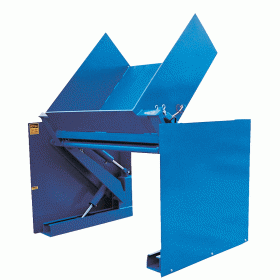
Back injuries remain one of the most common and costly problems in industrial workplaces. Across manufacturing, food and beverage, packaging, distribution and other material handling environments, employees are injured millions of times each year while lifting, reaching, or handling heavy and awkward loads. Beyond the human cost of pain and reduced quality of life, these injuries drive higher healthcare expenses, lost productivity, absenteeism and workers’ compensation claims.
Ground level lift and tilt tables are engineered specifically to reduce these risks. By lifting loads from floor level and tilting them toward the worker, this equipment brings materials into an ergonomic working position, dramatically reducing strain on the back, shoulders and arms.
Why Back Injuries Occur in Material Handling
Most workplace back injuries fall into two categories:
- Acute injuries caused by a single heavy lift or sudden movement
- Cumulative trauma injuries that develop over time from repetitive bending, reaching, and lifting
A common risk factor in both cases is working with loads held away from the body. Extended reach increases stress on the lower back and spine, especially when repeated throughout a shift. Reducing lift height, reach distance and awkward postures is critical to preventing these injuries.
What Is a Ground-Level Lift and Tilt Table?
A ground-level lift and tilt table is an ergonomic material handling device designed to:
- Lift loads directly from floor level
- Raise them to a comfortable working height
- Tilt the platform to improve access and visibility
Unlike pit-mounted lift tables, ground-level units sit on top of the floor, eliminating the need for concrete pits or permanent structural modifications. Many models combine scissor-lift elevation with tilting or rotating platforms, making them ideal for flexible industrial environments.
How Lift and Tilt Tables Reduce Back Injuries
Ground level lift and tilt tables help prevent injuries in two primary ways:
1. Eliminating Heavy Manual Lifting
By lifting loads weighing up to several thousand pounds, these tables remove the need for workers to manually raise heavy items. Loads are brought to waist height or another optimal level, reducing the risk of sudden strain or injury during lifting.
2. Reducing Repetitive Strain
The tilting function rotates workpieces often up to 45 degrees, so employees can access parts without bending deeply or reaching into containers. Keeping arms closer to the body reduces cumulative stress on the back, shoulders, and neck.
Ergonomic and Safety Features
High quality lift and tilt tables often include:
- Push button controls for precise height and tilt adjustment
- Restraining chains or load retainers to secure materials during tilting
- Electric toe guards to protect against pinch points during lowering
- Interlocking scissor legs for stability under heavy loads
These features work together to support safe operation while maintaining efficient workflow.
Productivity and Employee Benefits
Improving ergonomics does more than reduce injuries it also boosts productivity. When materials are positioned at the correct height and angle:
- Tasks are completed faster
- Worker fatigue is reduced
- Errors decrease
- Employee morale improves
Over time, fewer injuries and less fatigue translate into more consistent output and lower downtime.
Common Applications
Ground level lift and tilt tables are widely used in:
- Manufacturing and assembly operations
- Warehousing and distribution centers
- Packaging and kitting stations
- Food, beverage and consumer goods production
- Any environment involving pallets, bins, drums, cartons, or fabricated parts
Frequently Asked Questions
What is a ground level lift and tilt table?
A ground level lift and tilt table is an ergonomic device that lifts and tilts loads from floor level to a comfortable working position, reducing bending and reaching.
How do lift and tilt tables reduce back injuries?
They minimize manual lifting, bending, and twisting by positioning loads at an ergonomic height and angle, helping maintain proper posture.
Are lift and tilt tables considered ergonomic equipment?
Yes. They are designed to support neutral body positioning and reduce physical stress associated with repetitive material handling.
Do lift and tilt tables help with OSHA compliance?
While OSHA does not mandate specific equipment, lift and tilt tables help address recognized ergonomic hazards under OSHA’s general duty clause.
What industries benefit most?
Manufacturing, warehousing, distribution, packaging and assembly operations see the greatest benefit.
What loads can they handle?
Common loads include pallets, bins, containers, drums, cartons and fabricated parts, with capacities ranging from light duty to heavy duty applications.
Ground-level vs. pit-mounted lift tables—what’s the difference?
Ground-level units sit on the floor and require no pit, while pit-mounted tables are recessed into the floor and require permanent installation.
Are tilt tables safer than manual lifting?
Yes. They significantly reduce the risk of back strain, fatigue and repetitive stress injuries compared to manual handling.
Can lift and tilt tables improve productivity?
Absolutely. Proper load positioning reduces fatigue and speeds up task completion while lowering injury related downtime.
How do I choose the right lift and tilt table?
Consider load weight, platform size, lift height, tilt angle, duty cycle and application requirements. Always verify suitability for your specific use.
Final Note
Ground level lift and tilt tables are a proven solution for reducing back injuries while improving efficiency and workplace safety. By bringing the work to the worker rather than forcing the worker to adapt to the load, these systems play a critical role in modern, ergonomically designed material handling operations.
It is the customer’s responsibility to verify suitability and correct fit for each application.