
 Browse 28 Products
How to Safely Move Heavy Machinery and Equipment
Moving heavy machinery inside a facility can be one of the most difficult and potentially dangerous material-handling tasks. Equipment movers—also known as machine skates or machinery rollers—provide a practical solution for relocating heavy loads safely across warehouse and plant floors.
The Beacon Equipment Mover product page features heavy-duty systems designed to move machinery weighing up to 30,000 lbs across smooth industrial surfaces. These units use low-profile rollers and rotating tops that allow equipment to be positioned precisely with minimal force.
This guide explains how equipment movers work, how to select the correct model and what buyers should evaluate before purchasing.
What Is an Equipment Mover?
An equipment mover is a compact roller platform designed to transport heavy equipment across floors without lifting the entire load with cranes or forklifts.
Different Features can include, depending on model:
- Heavy-duty steel frame construction
- Low-profile roller assemblies
- 360° swivel tops for maneuverability
- Non-marking wheels or rollers
- Rubber grip surfaces to stabilize loads
These systems transfer weight directly to the rollers, reducing friction and allowing heavy machinery to move with relatively low pushing force.
Equipment movers are commonly used in:
- Manufacturing plants
- Machine shops
- Maintenance facilities
- Industrial installations
- Equipment relocation projects
Material handling equipment like this can improves productivity and reduces manual lifting risks when transporting heavy loads in warehouses and factories.
How Equipment Movers Work
Equipment movers operate by distributing the weight of heavy machinery across multiple roller skates.
Typical Setup
- Machinery is lifted slightly using:
- Pry bars
- Toe jacks
- Forklifts
- Equipment movers are placed under the load.
- Rollers carry the weight across the floor.
- Steering bars or rotating tops control direction.
Because the rollers support the entire load, the force required to move equipment is significantly reduced compared to dragging or sliding heavy machinery.
Types of Equipment Movers
The equipment mover category typically includes two main styles.
Moving Skates
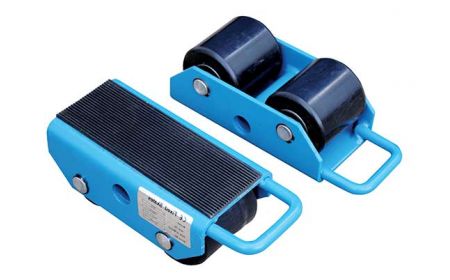
These units provide simple straight-line movement.
Typical features:
- Rubber load surface for grip
- Heavy-duty roller assemblies
- Capacities up to 24 tons depending on configuration
Common uses:
- Moving heavy machines across shop floors
- Installing large industrial equipment
- Maintenance repositioning
Machine Skates (Steerable Systems)
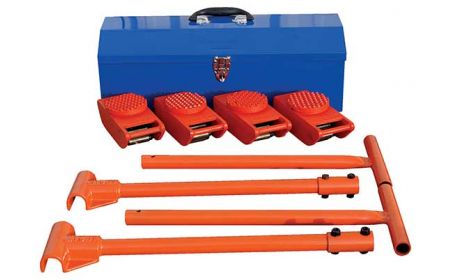
Machine skates are designed for controlled directional movement.
Key features include:
- Swivel tops rotating 360°
- Chrome steel ball bearings for smooth turning
- Designed to roll over cracked or uneven floor areas
- Capacities up to 30,000 lbs
Common uses:
- Machinery installation
- Equipment relocation inside plants
- Industrial rigging operations
Key Factors When Choosing an Equipment Mover
Selecting the correct unit requires evaluating several important factors.
1. Load Capacity
The total weight of the load must not exceed the rated capacity of the equipment movers.
Buyers should consider:
- Total machine weight
- Number of movers used
- Weight distribution
Example for evenly distributed weight only: More skates are required for non-evenly distributed weight.
| Equipment Weight | Suggested Skate Capacity |
|---|---|
| 5,000 lbs | 4 × 5,000 lb skates |
| 10,000 lbs | 6 × 5,000 lb skates |
| 30,000 lbs | 8 x 10,000 lb skates |
Always include a safety factor to prevent overload. Must be moved on a smooth floor capable of taking on the point load of each skate.
2. Floor Surface Conditions
Equipment movers work best on smooth, hard floors.
Ideal surfaces:
- Concrete floors
- Epoxy warehouse floors
- Steel plates
Not recommended for:
- Soft surfaces
- Dirt or gravel
- Heavily damaged floors
Some models are designed to handle small cracked or pitted surfaces, improving mobility in older industrial facilities.
3. Load Stability
Heavy machines must remain stable during movement.
Look for features such as:
- Rubber traction surfaces
- Wide load platforms
- Adjustable positioning tops
These help prevent equipment from sliding or shifting.
4. Steering Control
Large equipment often requires controlled steering.
Common steering options include:
- Swivel top plates
- Steering handles or tow bars
- Adjustable skate positioning
These features allow precise control when navigating around equipment or inside narrow aisles. Always be careful of tight or confined spaces and not to get trapped.
5. Quantity of Movers Required
Most heavy equipment requires multiple movers to support the load.
The quantity of the skate movers the responsibility of the moving engineer. Typical setups can include:
| Equipment Type | Number of Movers |
|---|---|
| Small machinery | 4 movers |
| Medium equipment | 6 movers |
| Large industrial machines | 8+ movers |
Proper placement ensures even weight distribution and smooth travel.
Common Applications for Equipment Movers
Equipment movers are widely used across industrial environments.
Manufacturing Plants
- Moving CNC machines
- Installing presses
- Relocating fabrication equipment
Maintenance Departments
- Repositioning compressors
- Moving pumps
- Equipment replacement
Warehousing and Logistics
- Heavy pallet relocation
- Conveyor installation
- Facility layout changes
Construction and Installation
- Setting industrial machinery
- Positioning generators
- Equipment installation projects
Safety Tips When Using Equipment Movers
Moving heavy machinery requires careful planning and proper safety procedures.
1. Verify Load Capacity
Never exceed rated capacities.
2. Inspect Movers Before Use
Check for:
- Roller damage
- Structural cracks
- Bearing wear
3. Use Proper Lifting Tools
Use:
- Toe jacks
- Pry bars
- Forklifts
Never place movers under a load without safely lifting it.
4. Maintain Controlled Movement
Move equipment slowly and keep personnel clear of travel paths.
5. Use Level Floors
Uneven surfaces increase the risk of load instability.
Why Buyers Choose Equipment Movers
Beacon equipment movers are designed for demanding industrial environments.
Key benefits include:
- Heavy-duty steel construction
- 360° rotating swivel tops
- High load capacities up to 30,000 lbs
- Models for both smooth and imperfect floor conditions
- Compact designs for tight industrial spaces
These systems are to be used by experienced maintenance crews, contractors and facility engineers responsible for moving large equipment safely and efficiently.
Summary
Equipment movers provide a method for transporting heavy machinery across industrial floors. By using roller systems with swivel tops and high-capacity frames, these tools allow large equipment to be relocated without cranes or permanent installations.
When selecting equipment movers, buyers should carefully evaluate load capacity, floor conditions, steering requirements and load stability to ensure safe operation. Think Safety First.